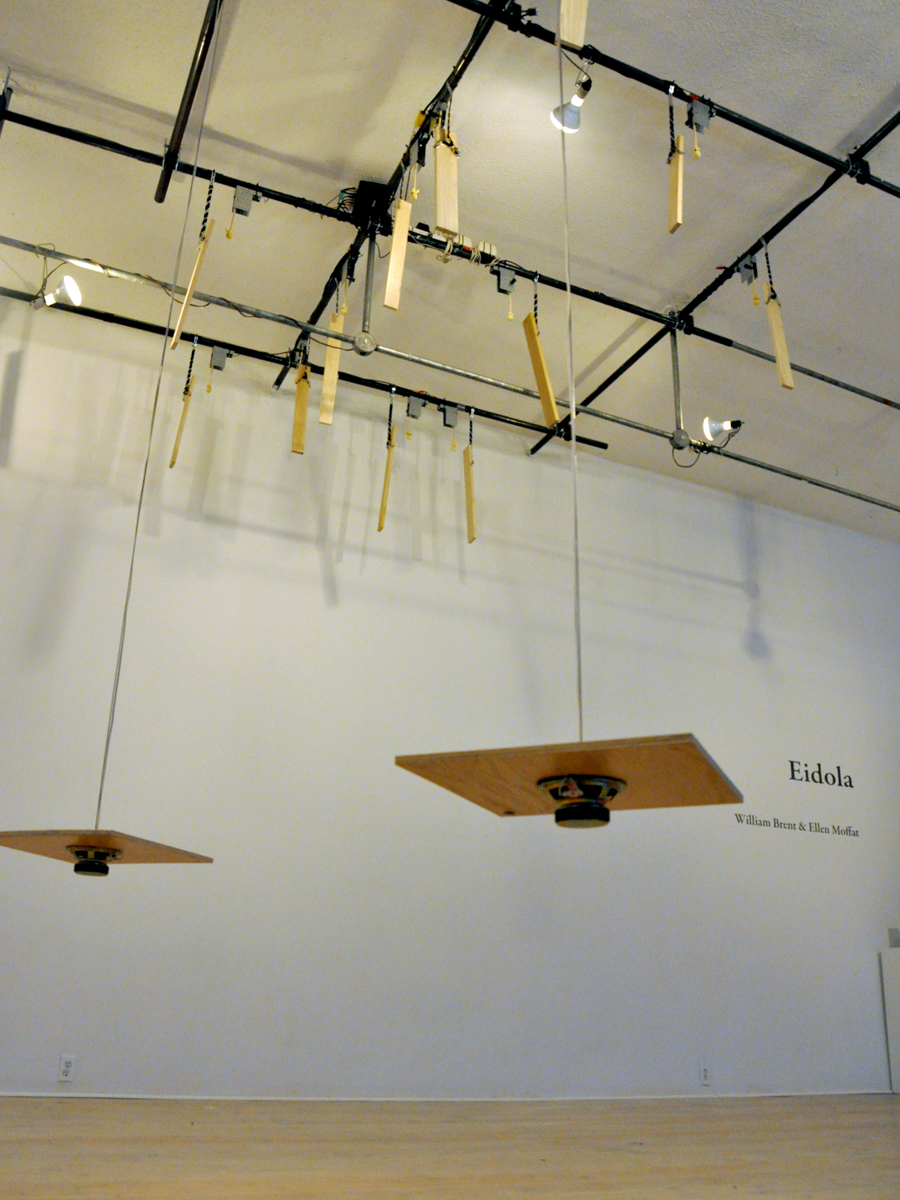
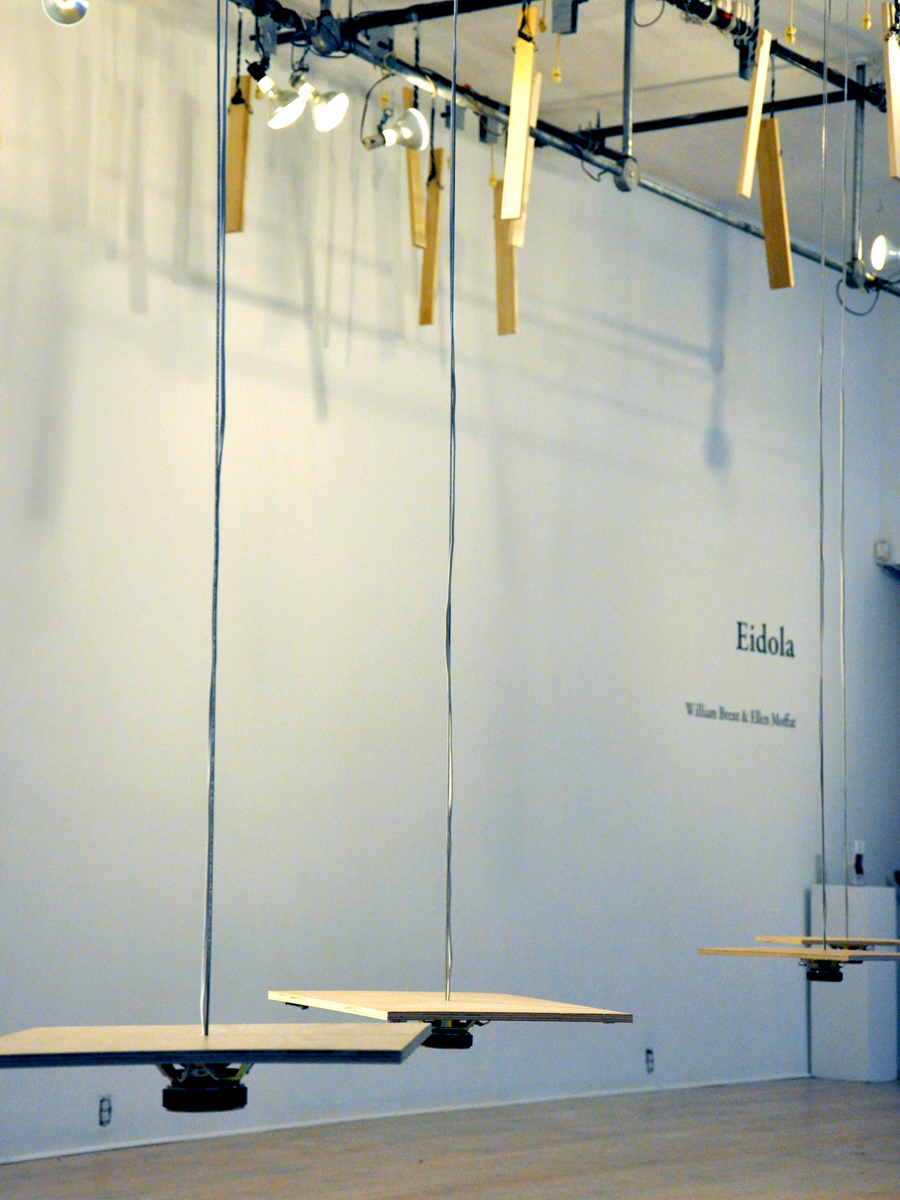
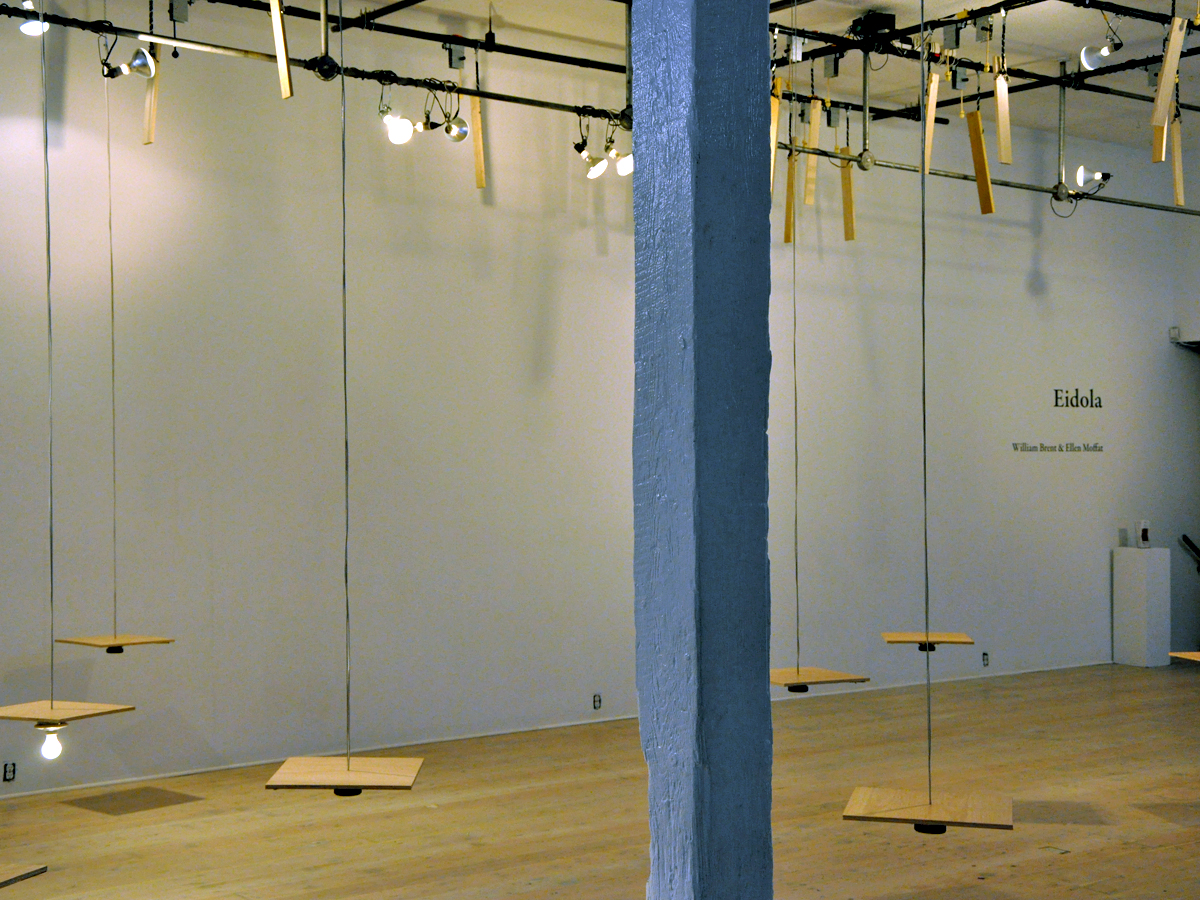
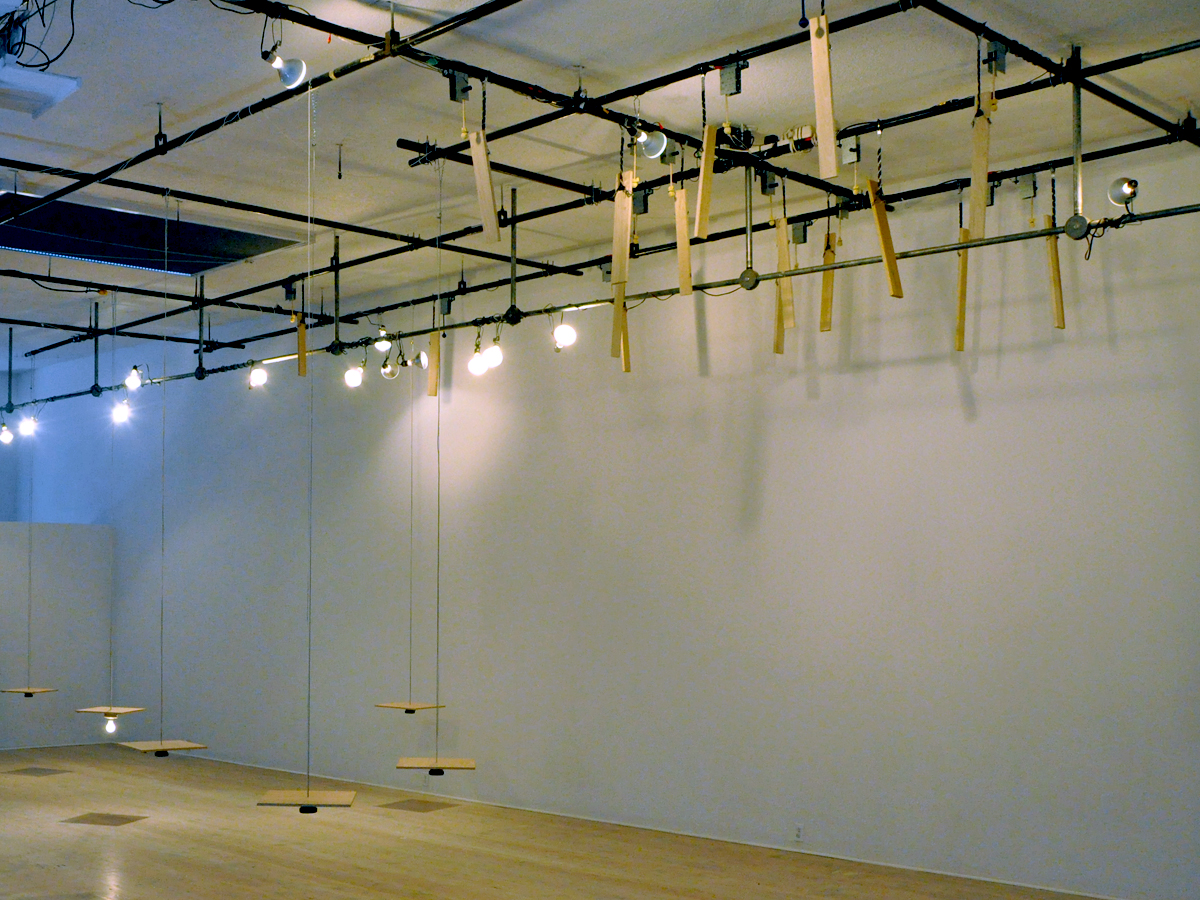
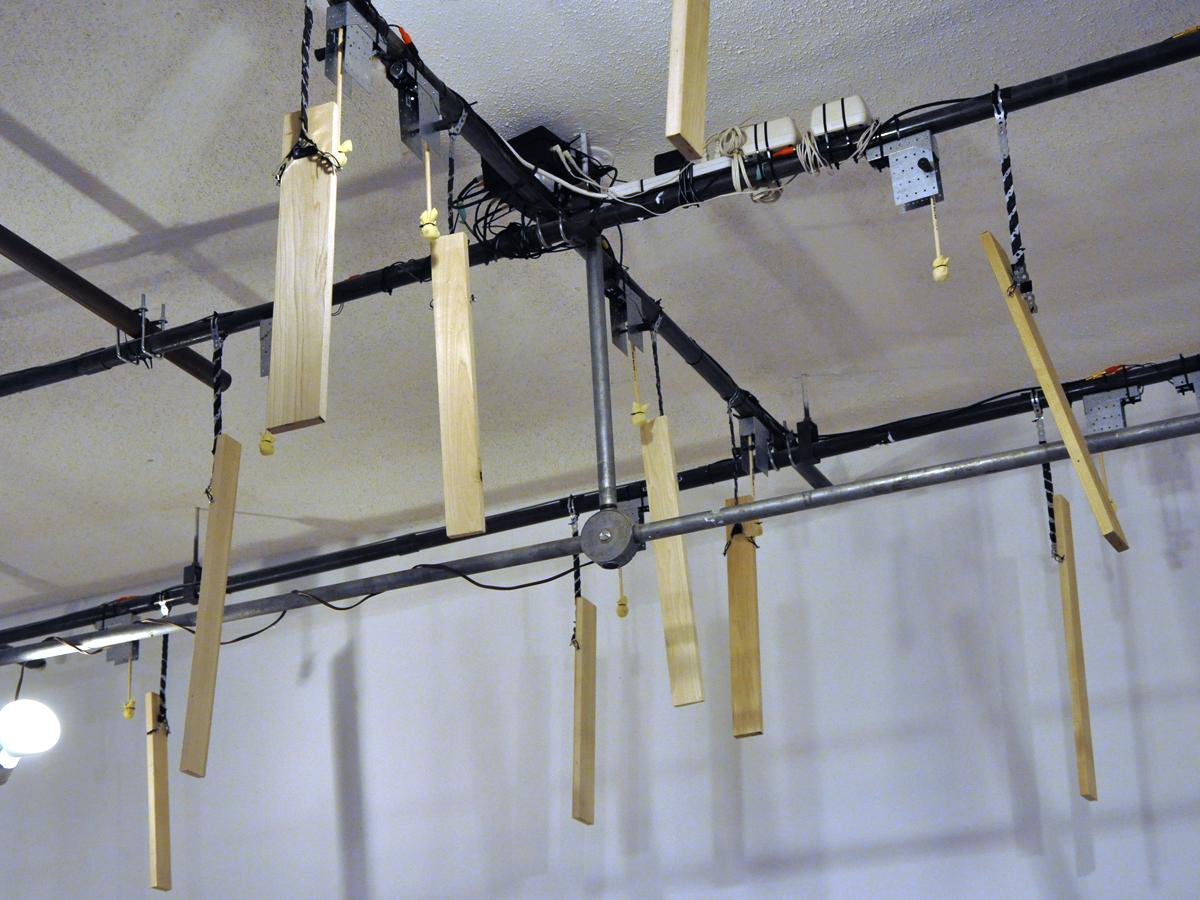
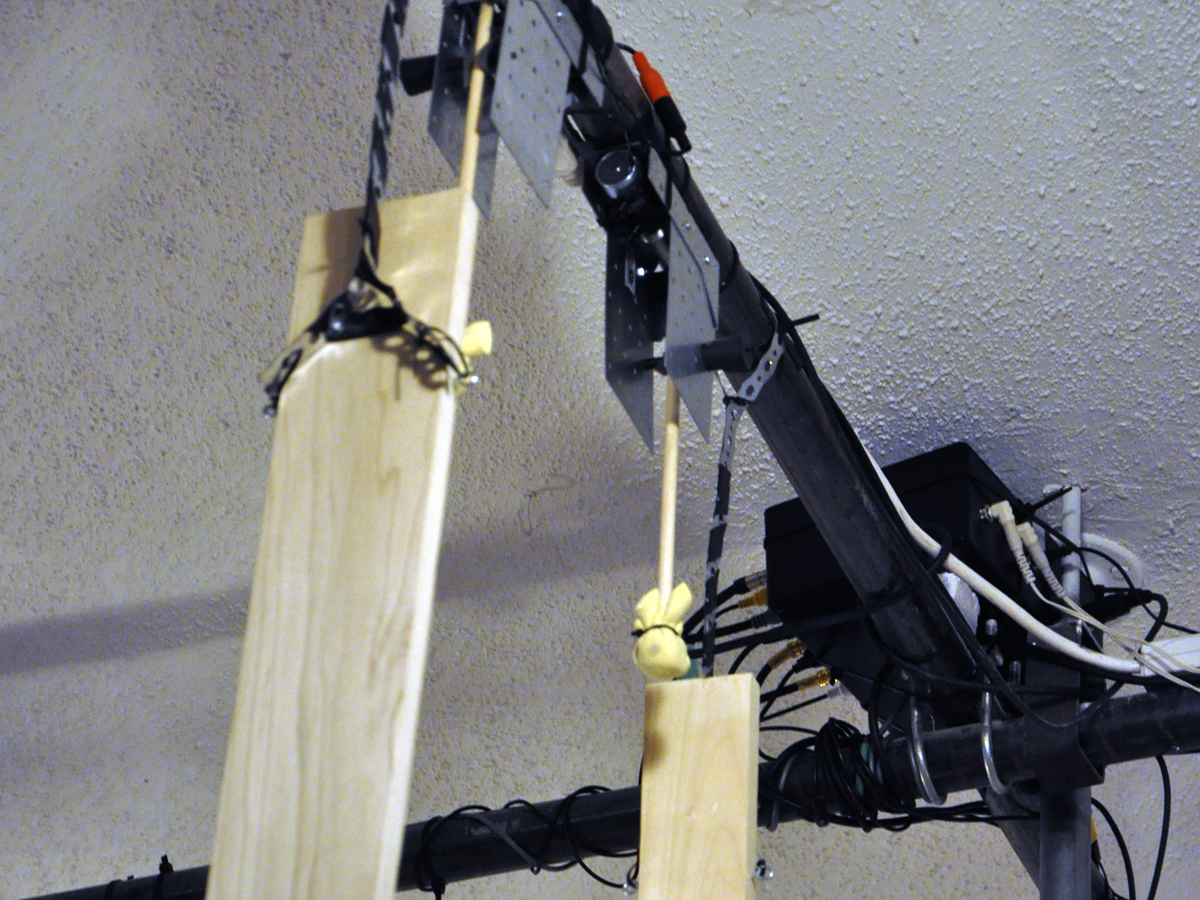
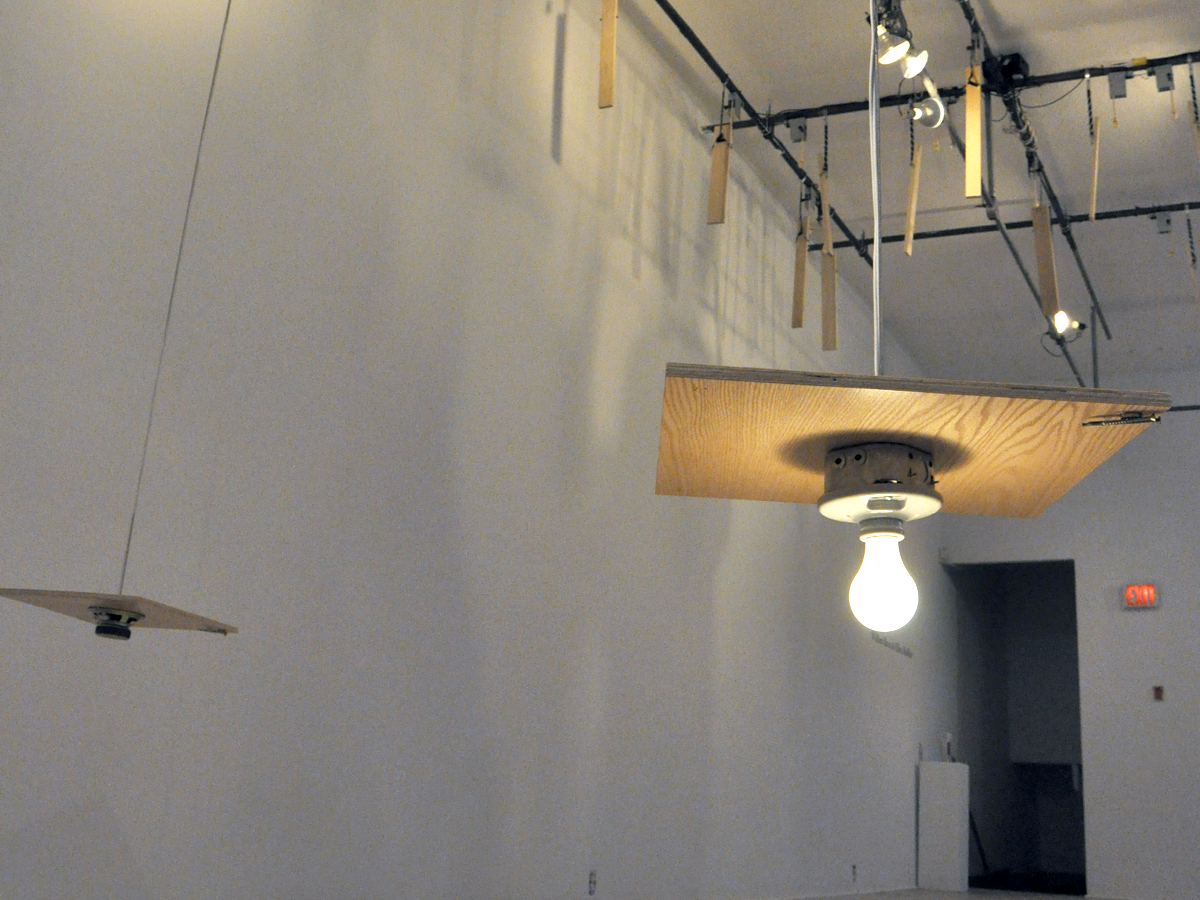
Eidola. David Cecchetto and Ted Hiebert, curators. Open Space Artist Run Centre (Victoria, BC). August 28 - October 3, 2009

Participating artists:
William Brent
Ellen Moffat


Installation Images

thumbnail image thumbnail image thumbnail image thumbnail image


>> click here to download the Eidola exhibition monograph (1.1 MB)


>> click here for the director and curators' introductions to the exhibition (YouTube)

>> click here to hear the artists speak about their work (YouTube)

Eidola

When silence and darkness meet, mysteries emerge -- absences and seductions and imaginary sounds and visions that rise, combine and resonate. Liminal presences, emerging out of nothingness -- negative spaces and negative sounds -- strangely rendered into tentative appearance, even if only to reinforce their ghostly, haunted perspectives.

Eidola: Open Space (Victoria, BC)

Eidola -- Greek for ghosts -- brings substance to nothingness. In this sense, it is a psychological installation: instruments play themselves with slow-rhythm syntax, and neural networks speak in fractured tongues, strangely singing along; a dischordant chorus of recombinant tone. Here, ghosts grow voices of their own, technologically-induced extensions of times lost to the simulation of present, unfaithful recreations that emphasize on purpose the disjunction of automated voice and sound and presence. And in such emphasis, paradoxically, it is precisely the disappearances that emerge, front and central. These disappearances are confrontational: they are hauntings, but also real voices that are reproduced in phantom spaces; they are ghosts in the machines that also ghost those that surround them, implicating their very audience in the witnessing of impossibility. For what are ghosts if not autonomic consciousness -- automated intentionalities that infiltrate the gallery space -- as if asking simply how we decide that somehow we ourselves are alive? For in such witness, we too are ghosted -- haunted -- by the very machines we witness: we are the ghosts in the machines...

Eidola -- Greek for bias -- brings together two distinct discipline-informed new media practitioners: one (William Brent) a computer-musician who makes objects, and the other (Ellen Moffat) a media artist who makes sound. Between the two, a cross-pollination occurs as sounds emerge through object presences. Or is it the reverse, and objects emerge as the material detritus of sound? Sounds channeled into spatial dialogue, ghosts singing with ghosts through bodies of wire and wood: an interdisciplinarity of new media practice, realized through practices of disciplinary ghosting. What happens, in other words, when sounds take visual presence? No longer virtual -- no longer simply auditory -- sounds now must be seen as well. Such is the demand; and the demand is no less for the object that insists on being heard. No longer passive visual presence, these objects speak in tongues as befits a haunting of this sort...

Eidola -- the exhibition -- grows from discussion of disciplinary biases and their impact on interdisciplinary and new media practices. In particular, the exhibition is informed by ongoing dialogue -- at Open Space and beyond -- regarding approaches to sound composition, visual installation and new media arts production. Responding to direct community demand and critique -- as well as the desire to foster, cultivate and nurture conflicting discursive possibilities -- Eidola is an examination of interdisciplinary media practices that brings together audiences with backgrounds in music, technology, visual art, media, and interdisciplinary practice with the goal of engendering critical engagement with the intricacies of a hybrid artistic world. Moreover, Eidola assumes this hybridity as fundamental to contemporary artistic practice (even those practices that do no identify as such), an assumption that is daily evidenced in the concrete, material workings of institutions such as Open Space. Acknowledging the depth and breadth of new media practices -- with many practitioners migrating from visual and audio disciplinary backgrounds -- this project thus prioritizes encounter over discourse, and seeks to hold discourse accountable to the disparate disciplinary encounters that will inevitably occur.